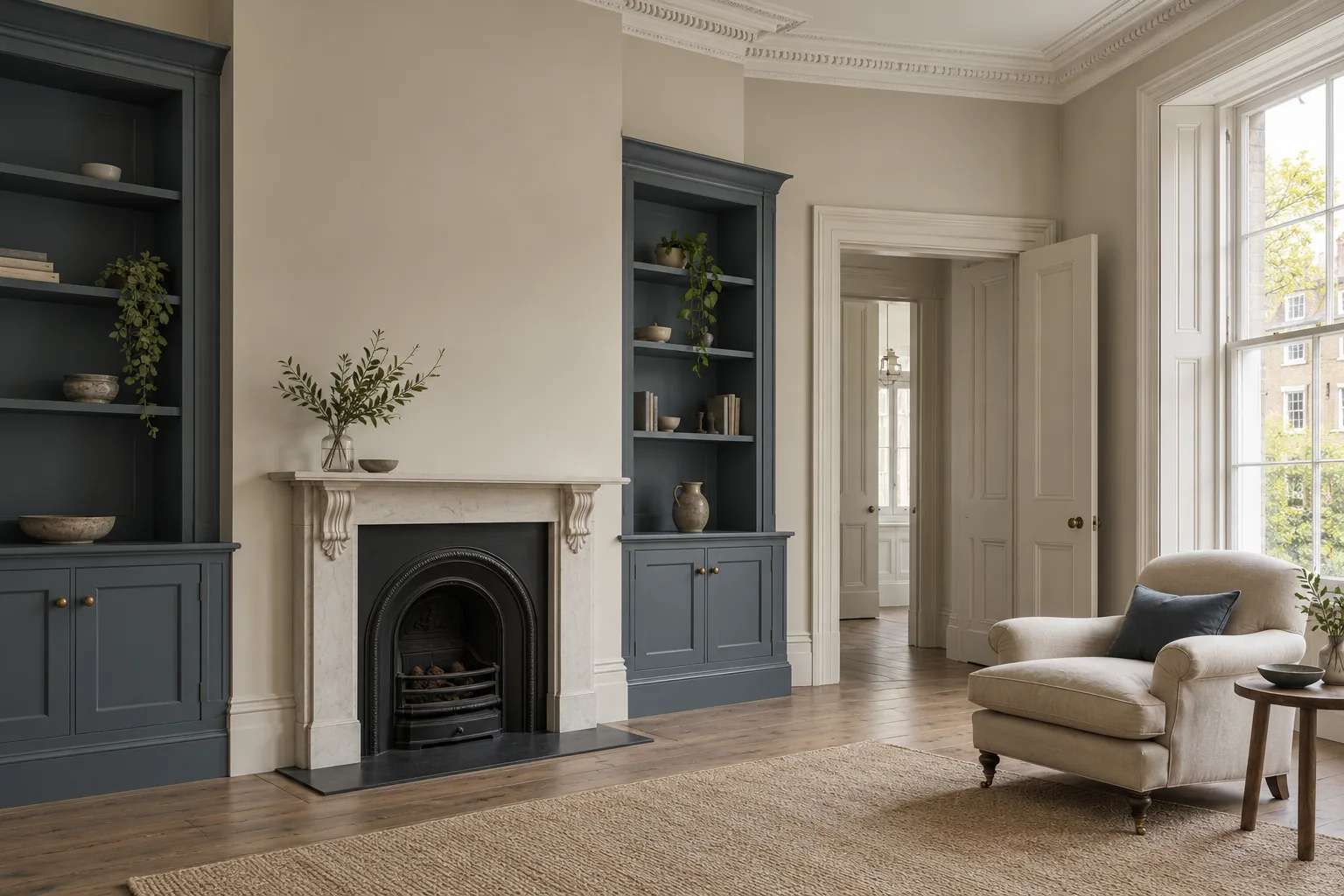
Heritage & Listed Building Painting in Chelsea

Specialist painting for Chelsea's heritage properties — Grade II listed buildings, conservation area homes, and properties with irreplaceable period features.

Heritage & Listed Building Painting in Chelsea — example project

Expert Heritage & Listed Building Painting in Chelsea

Chelsea contains hundreds of listed buildings and virtually the entire area falls within one or more conservation areas designated by the Royal Borough of Kensington & Chelsea. Painting these properties requires not just decorating skill but specialist knowledge — of period-appropriate materials, breathable paint systems, regulatory requirements, estate management specifications, and the techniques needed to preserve irreplaceable architectural features both inside and out. From the Grade I listed Royal Hospital and its surrounding grounds to the Grade II listed Georgian townhouses of Cheyne Walk, the Victorian terraces of Oakley Street, and the Edwardian mansion blocks of Cadogan Gardens, Chelsea's heritage buildings span three centuries of architectural history and each era demands specific understanding. Our heritage painting service is built specifically for these demands. We work with conservation officers, estate managers, architects, and heritage consultants to ensure every project meets the required standards while achieving a beautiful, lasting result. Whether you need to repaint a listed building's stucco front in a historically accurate colour, restore the interior of a conservation area townhouse with period-appropriate finishes, or maintain the communal areas of a heritage mansion block to estate standards, our heritage painting team brings the knowledge and care these exceptional buildings require.

Our Approach

Heritage painting begins with understanding the building — its construction period, original materials, any listed building or conservation area constraints, and the specific challenges its condition presents. We research the building's history where needed, consulting RBKC's conservation records and estate archives to understand original colour schemes and materials. We use breathable, period-appropriate paint systems selected for each building's specific requirements: traditional lime wash for Georgian properties where authentic materials are required, lime-based paints for early Victorian buildings with lime plaster and mortar, and modern heritage ranges (Little Greene's historical colours, Farrow & Ball's archive palette, Dulux Heritage) that offer period-accurate colours with contemporary performance for properties where modern formulations are acceptable. All preparation is carried out using methods that protect original fabric — we never use aggressive sanding or chemical stripping on historic surfaces without careful assessment. Original decorative features — cornicing, ceiling roses, door mouldings, exterior pilasters, and ornamental stucco — are hand-painted with specialist brushes to preserve their definition and character. We document all work photographically and can provide heritage reports for listed building consent applications.

Why This Matters in Chelsea

Cheyne Walk alone has over 30 listed buildings. The Boltons, Carlyle Square, Old Church Street, Upper Cheyne Row, and Lawrence Street are studded with Grade II and Grade II* properties. The Cadogan Estate, Sloane Stanley Estate, and Smith's Charity Estate all maintain strict standards for decoration of properties under their management. Working on these buildings is both a privilege and a responsibility — poor paint choices, non-breathable coatings, or heavy-handed preparation can cause lasting damage to historic building fabric and attract enforcement action from RBKC's conservation officers. Our team has extensive experience navigating this landscape: understanding which paint systems are appropriate for which building periods, which colour changes require formal consent, and how to coordinate with conservation officers and estate managers to achieve compliant, beautiful results.


What's Included

  • Heritage property assessment and detailed paint specification
  • Listed building consent support and documentation where required
  • Period-appropriate paint systems (lime wash, lime-based, breathable modern paints)
  • Specialist preparation techniques that protect historic surfaces
  • Hand-finishing of all decorative features (cornicing, mouldings, plasterwork)
  • Coordination with conservation officers and estate managers
  • Photographic record of all work before, during, and after
  • Written specification for future maintenance and reordering
  • Heritage colour research and period-accurate colour matching
  • Guidance on ongoing maintenance to preserve heritage features


Having used several decorators in Chelsea over the years, these are by far the best. Their knowledge of period properties and conservation area requirements saved us weeks of back-and-forth with the council.

Dr. Sarah MitchellCarlyle Square, Chelsea


Heritage & Listed Building Painting FAQ

Internal repainting of a listed building generally does not require consent, provided you are not altering the character of the interior — for example, painting over exposed brickwork or timber that has historically been left natural. External changes, particularly colour changes to facades, front doors, or windows, typically do require listed building consent. Conservation area properties (which includes most of Chelsea) may also need consent for external colour changes. We assess each situation individually and advise accordingly.
It depends on the building's period and construction. Georgian properties may require traditional lime wash or lime-based paints that allow the building fabric to breathe. Victorian properties can typically use breathable modern paints from heritage ranges such as Little Greene or Farrow & Ball. The key principle is breathability — non-breathable modern paints can trap moisture in historic walls, causing damage to plaster, mortar, and masonry over time. We never use non-breathable products on historic fabric without careful assessment.
Yes, we regularly support clients with conservation area consent applications for external colour changes in Chelsea. We can recommend historically appropriate colours, prepare detailed painting specifications, provide supporting information about the proposed paint systems, and liaise with RBKC's conservation team on your behalf. Our experience with these applications means we know what information is needed and what colour choices are likely to be approved.
Heritage painting typically costs 15–30% more than standard painting due to the additional care required in preparation, the use of specialist products, and the slower pace needed to protect historic features. A standard Chelsea listed property interior repaint might cost £15,000–£30,000 compared to £12,000–£22,000 for a similar non-listed property. The additional investment protects irreplaceable building fabric and ensures regulatory compliance.
Yes, we can research and replicate original historic colour schemes using paint archaeology — carefully scraping back layers to identify original colours — and referencing historical colour records. Little Greene and Farrow & Ball both offer historically researched colour ranges based on period archives. For significant listed buildings, we can commission professional paint analysis to identify original pigments and formulations.
Yes, we have extensive experience working within the Cadogan Estate's decoration standards, which cover many of Chelsea's finest heritage properties. We understand their approved colour palette, preferred products, and application standards for both exterior facades and communal interior areas. We can coordinate approval applications and inspections as part of our service.

Ready for Heritage & Listed Building Painting in Chelsea?

Get a free, no-obligation quote from Chelsea's most trusted painting specialists. Same-day response guaranteed.