Heritage & Listed Building Painting in Royal Hospital & Tite Street, Chelsea
Expert heritage & listed building painting for homes and properties in Royal Hospital & Tite Street, Chelsea SW3. Conservation area specialists with deep local knowledge.
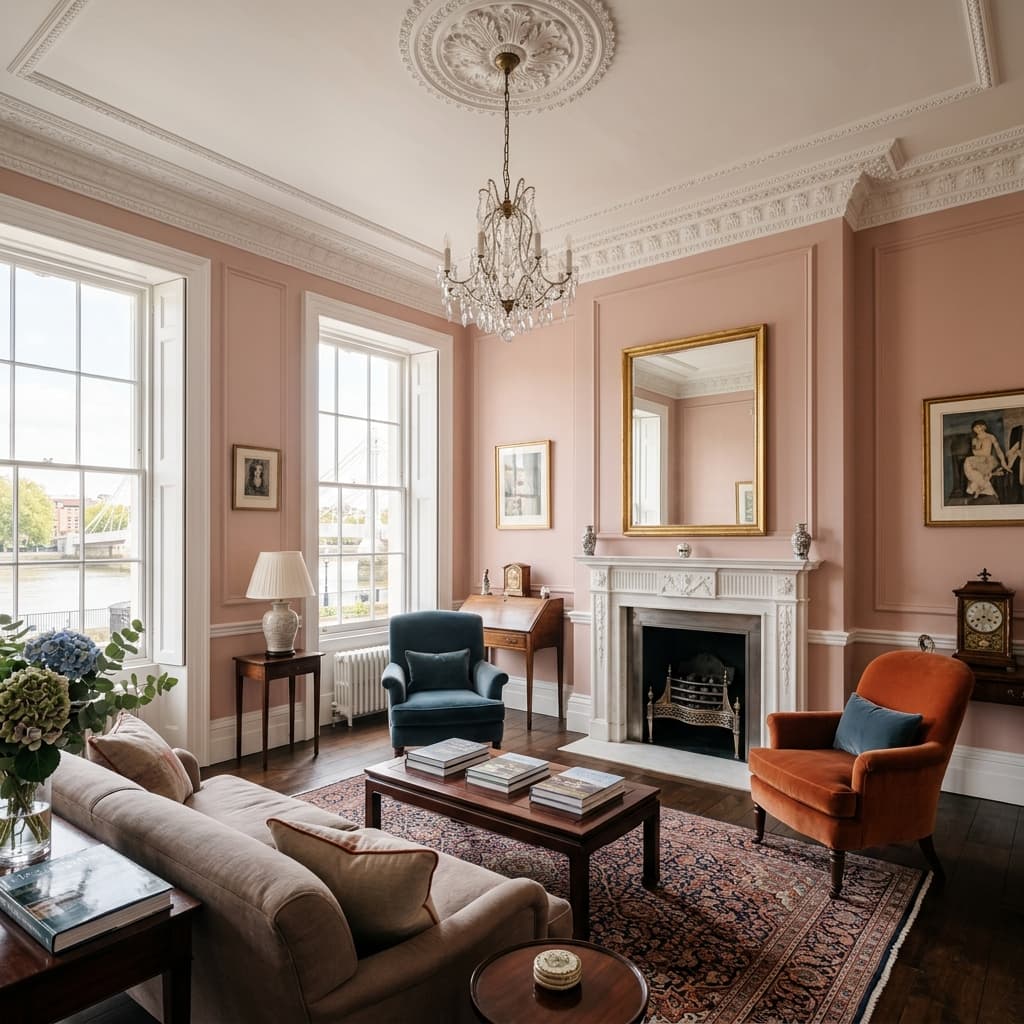
Heritage & Listed Building Painting in Royal Hospital & Tite Street
The Royal Hospital neighbourhood is steeped in history, and its residential properties reflect nearly three centuries of evolving architectural taste. Heritage painting in this area ranges from the faithful restoration of Queen Anne panelled rooms on Cheyne Walk's eastern end to the conservation of Regency decorative schemes along St Leonard's Terrace and the careful treatment of early-Victorian interiors on Franklin's Row. The neighbourhood's proximity to the Royal Hospital itself—Sir Christopher Wren's masterpiece—sets a high standard for heritage craftsmanship. Many houses here have served as artists' studios, and some retain original fitted cabinetry, ornamental plasterwork, and hand-painted wall decorations of considerable historic interest. Our heritage painters approach every project in the Royal Hospital neighbourhood with a conservation mindset, prioritising the preservation of original fabric, using reversible techniques, and documenting all interventions for the benefit of future custodians of these important Chelsea houses.
Property Considerations in Royal Hospital & Tite Street
The Royal Hospital neighbourhood spans multiple architectural periods, requiring painters to be fluent in Queen Anne, Georgian, Regency, and early-Victorian decorative conventions. Many properties contain original features of art-historical interest that may warrant formal recording before any intervention. English Heritage and RBKC conservation officers are actively engaged in this area.
Conservation & Planning Notes
Within the Chelsea Conservation Area. Tite Street has multiple listed buildings including the former homes of Oscar Wilde and John Singer Sargent.
What's Included
- ✓Heritage property assessment and detailed paint specification
- ✓Listed building consent support and documentation where required
- ✓Period-appropriate paint systems (lime wash, lime-based, breathable modern paints)
- ✓Specialist preparation techniques that protect historic surfaces
- ✓Hand-finishing of all decorative features (cornicing, mouldings, plasterwork)
- ✓Coordination with conservation officers and estate managers
- ✓Photographic record of all work before, during, and after
- ✓Written specification for future maintenance and reordering
- ✓Heritage colour research and period-accurate colour matching
- ✓Guidance on ongoing maintenance to preserve heritage features
Heritage in Royal Hospital — FAQ
Heritage & Listed Building Painting in Nearby Neighbourhoods
Other Services in Royal Hospital & Tite Street
Related Services
Need Heritage in Royal Hospital?
Get a free, no-obligation quote for heritage & listed building painting in Royal Hospital & Tite Street, Chelsea. Same-day response guaranteed.