heritage

How We Protect Period Features During Painting in Chelsea

Published 20 May 2025


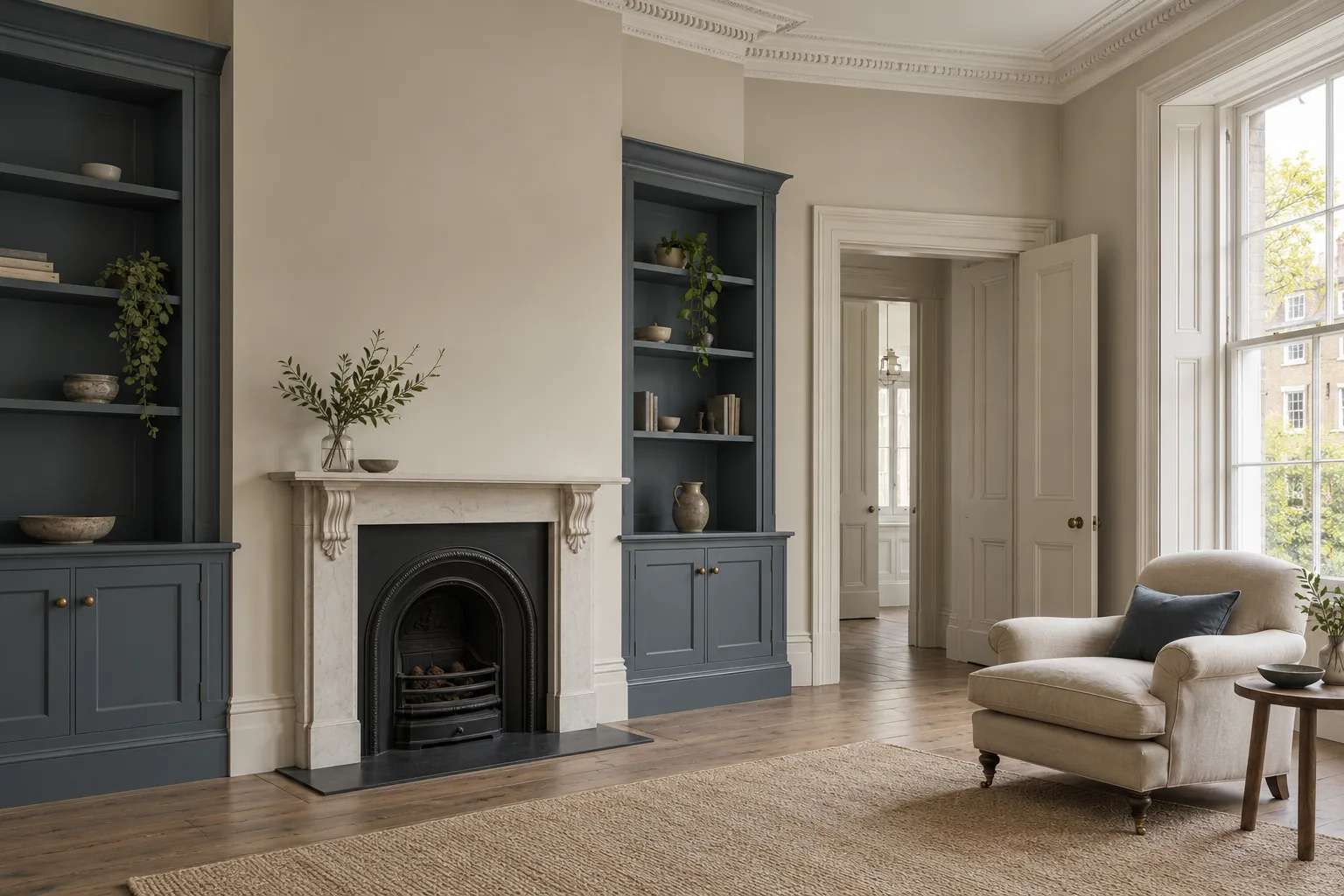
Every week, we work in Chelsea homes that contain original features dating back 150 years or more — hand-run cornicing, intricate ceiling roses, carved marble fireplaces, original pine and oak floorboards, working timber shutters, and decorative plasterwork that no craftsman alive today could reproduce at a reasonable cost. Protecting these features during painting is not an afterthought or an optional extra; it is a core professional responsibility.

We have developed specific protection protocols over years of working in Chelsea's finest period properties — on Carlyle Square, Margaretta Terrace, Elm Park Gardens, and throughout the conservation areas of SW3 and SW10. Here is how we approach the protection of every major period feature.

Cornicing and Plaster Mouldings

Victorian and Georgian cornicing in Chelsea homes ranges from simple cove mouldings to elaborate multi-layered designs incorporating dentils, egg-and-dart motifs, acanthus leaves, and modillion blocks. This plasterwork is fragile. A careless brush handle, the edge of a scaffold board, or an ill-positioned roller can chip or crack mouldings that have survived since the 1850s.

Our protection approach begins with a thorough inspection. We photograph all cornicing before work starts, noting any existing damage. During painting, we use a systematic method:

**Masking:** Where we are painting walls but not cornicing (or vice versa), we apply low-tack masking tape (Frogtape Delicate Surface) along the edge. Standard masking tape is too aggressive for old plaster and can pull away paint or even plaster when removed.

**Hand cutting:** For the highest-quality finish where wall colour meets cornicing, we hand-cut the line with a fine brush rather than relying on tape alone. An experienced painter can cut a line to within a millimetre of the junction, producing a result that tape alone cannot match.

**Scaffold positioning:** When using scaffold towers or hop-ups in rooms with ornate cornicing, we ensure a minimum 150mm clearance between any scaffold component and the plasterwork. Foam pipe insulation is wrapped around any scaffold tubes that come within 300mm of decorative plaster.

Ceiling Roses

Chelsea's ceiling roses are often the most elaborate plasterwork in the house — concentric rings of ornament, deeply recessed patterns, and pendant bosses that collect paint drips like buckets. Many ceiling roses in Chelsea are original, cast in fibrous plaster and secured to the ceiling joists with wads and screws.

When painting a ceiling rose, we work from the centre outward, using small (1-inch and 2-inch) round brushes to work paint into every recess and around every raised element. We apply paint thinly to avoid pooling in the deeper mouldings — a thick coat in a recessed area will form a visible skin that cracks and peels. Two thin coats are always better than one thick coat on ornate plasterwork.

For rooms where the ceiling is being sprayed but the rose needs a different treatment (or vice versa), we mask the rose with cling film and low-tack tape before ceiling spraying. The cling film conforms to the complex shapes of the rose far better than paper or sheet masking.

Fireplaces

Chelsea homes typically feature original fireplaces on multiple floors — marble surrounds at ground and first floor, painted timber or cast-iron surrounds at bedroom level, and simpler designs in former servants' quarters. Each material requires different protection.

**Marble surrounds:** We cover marble fireplaces with a double layer of heavy cotton dust sheet, secured with painter's tape attached only to the dust sheet, never to the marble. Tape adhesive can stain marble permanently. The hearth is covered with a heavy-duty floor protector (Correx or similar) to prevent paint drips from reaching the stone.

**Cast-iron surrounds:** These are more robust but still require protection from paint splashes. We mask with tape and polythene sheeting. If the cast-iron surround is being painted as part of the works (common in Chelsea — Farrow & Ball Off-Black or Railings is the typical choice), we wire-brush loose material, apply Zinsser Bulls Eye 1-2-3 primer, and finish with two coats of heat-resistant paint rated to the appropriate temperature.

**Timber surrounds:** Painted timber surrounds may be part of the decoration scheme, but any carved or applied detail requires careful hand-painting rather than roller application. We use sash brushes (angled cutting-in brushes) to work paint into carved details without clogging the moulding profiles.

Timber Floors

Original timber flooring — wide pine boards in most Victorian Chelsea properties, narrow oak strip in Edwardian and later houses — is vulnerable to paint drips, spills, and the physical impact of ladders, scaffold, and foot traffic.

Our floor protection protocol is non-negotiable on every Chelsea project:

1. **Dust sheets:** Heavy cotton dust sheets (not polythene, which is slippery and dangerous) are laid over the entire floor area. We use 12oz cotton twill sheets that absorb drips rather than allowing them to pool and be tracked across the room.

2. **Hardboard or Correx pathways:** In high-traffic routes — the hallway, staircase, and any path between the front door and the work area — we lay hardboard sheets or Correx (corrugated plastic) over the dust sheets to distribute the weight of foot traffic and equipment.

3. **Stair protection:** Each stair tread is individually covered with a cotton dust sheet secured with painter's tape on the riser, not the tread surface. The tape is applied fresh each day and removed each evening to prevent adhesive transfer to the timber or finish.

4. **Scaffold feet:** Every scaffold tower, hop-up, and stepladder has rubber feet checked before placement. On delicate floors, we place plywood pads (300mm square) under each foot to distribute the load.

Window Shutters

Working timber shutters are one of Chelsea's most cherished period features. Original shutters on Carlyle Square, Cheyne Row, and the older streets of Chelsea fold into deep shutter boxes flanking the windows and, when closed, provide security, insulation, and blackout.

Painting shutters requires them to be fully opened, then fully closed, with paint applied in stages to ensure all surfaces — fronts, backs, edges, and the shutter box interior — receive an even coat. We paint the outer faces first with the shutters open flat against the reveal, allow them to dry, then fold them closed and paint the inner faces and edges.

The hinges are critical. Original shutter hinges are often hand-forged iron, and paint build-up over decades can prevent the shutters from folding properly. We carefully scrape old paint from hinge knuckles and barrel surfaces, apply a thin coat of penetrating oil, and ensure each hinge moves freely before repainting. The painted surface should stop 2-3mm short of the hinge to prevent future binding.

Stained Glass and Decorative Glazing

Several Chelsea properties feature stained glass or decorative leaded lights — particularly in fanlights, staircase windows, and internal doors. These are protected during painting with a full covering of cling film applied directly to the glass, followed by low-tack tape around the glazing bars. Any paint that does land on glass is removed immediately with a damp cloth — once dried, paint on textured or leaded glass is extremely difficult to remove without risk to the glazing.

Documentation and Handover

At the conclusion of every project in a Chelsea period property, we conduct a walk-through inspection with the client, checking every protected feature against our pre-works photographs. Any concern — a chip, a mark, a blemish that was not present before — is addressed immediately. This documentation process is not just good practice; it is essential accountability for working with irreplaceable historic fabric.

The cost of protecting period features properly is built into our quotations for every Chelsea project. It is not an optional line item. Period features are the reason Chelsea properties command the values they do, and preserving them is fundamental to our work.


Ready to Start Your Project?

Get expert painting and decorating for your Chelsea home. Free quotes, same-day response.